

Expert ROMSHI talks about lasers
How to Choose a Treatment Chair for Cosmetic Procedures? (Laser hair removal, cosmetology, massage, injections, hardware treatments)
The chair is one of the most important elements in the treatment room. It directly affects client comfort, the cosmetologist's convenience, and even the speed and quality of procedures. In 2026 the choice is huge, but the core criteria remain the same.TOP-10 criteria for choosing a treatment chair for a salon (in priority order)
- Type of procedures (the most important!)
- Only laser/IPL hair removal → a simple couch-style chair is enough (with or without adjustable headrest).
- Massage, body wraps, RF-lifting, pressotherapy → massage chair with adjustable backrest tilt, armrests, and height.
- Injections, fillers, thread lifting → cosmetology chair with adjustable headrest, armrests, and the ability to work in sitting/semi-reclined positions.
- Universal for everything → electric chair with 4–5 motors (height, backrest, leg section, Trendelenburg position, headrest).
- Number of motors (electric drive)
- 1–2 motors: budget option, only height + backrest (suitable for epilation).
- 3–4 motors: comfortable minimum (height, backrest, leg section, Trendelenburg).
- 5+ motors: premium (also armrests, headrest, pre-set positions).
2026 recommendation: minimum 4 motors — otherwise the cosmetologist will get tired very quickly.- Maximum load capacity
- 150–180 kg — standard for budget models.
- 200–250 kg — good mid-range.
- 300+ kg — premium (for larger clients, no issues).
- Upholstery material
- PU eco-leather — the most popular (cheap, easy to clean, but cracks after 2–4 years).
- Medical vinyl leather (PVC) — better choice: waterproof, antibacterial, lasts 5–8 years.
- Genuine leather — expensive, beautiful, but impractical.
- Fabric + eco-leather — avoid, gets dirty very quickly.
Removable covers are a huge plus for easy cleaning.- Height adjustment
- Minimum 45–50 cm (low position) — crucial for laser hair removal (cosmetologist sits).
- Maximum 80–90 cm — for standing work (injections, facials).
Electric height adjustment is a must-have.- Headrest and armrests
- Adjustable headrest (up/down, angle) — mandatory for face, neck, bikini area.
- Removable/foldable armrests — so the client can lie completely flat.
- Wheels and stability
- Wheels with locking brakes — convenient to move between rooms.
- No wheels — more stable, but harder to move.
- Additional features (2026 trends)
- USB ports for client phone charging.
- Heated backrest/seat (clients love it in winter).
- Built-in leg/hand rests.
- Antibacterial coating (with silver ions).
- Foldable/mobile model — if the room is small.
- Budget (real prices in Russia/CIS, 2026)
- 50,000–80,000 RUB — budget (1–2 motors, eco-leather, 150 kg load).
- 100,000–180,000 RUB — optimal balance (4 motors, good upholstery, 200 kg).
- 200,000–400,000 RUB — premium (5+ motors, vinyl, heating, USB).
- 500,000+ RUB — top brands (Cerri, Gharieni, Belberg, Lemi).
- Brands that professionals actually praise in 2026
- Belberg — best price/quality ratio.
- Cerri — Italian quality, but expensive.
- Lemi — premium, extremely durable.
- Aries — budget but reliable.
- Nova — mid-range, lots of motors.
- No-name Chinese — only buy with 1–2 year warranty and from verified suppliers.
Quick checklist for the “ideal chair for laser hair removal + cosmetology”
- 4+ motors
- Height range 45–85 cm
- Load capacity 200+ kg
- Medical vinyl upholstery (not eco-leather)
- Adjustable headrest + foldable armrests
- Removable covers
- Price 120,000–250,000 RUB
Bottom line:
Don’t buy the cheapest option — it will fall apart in 1–2 years, and you’ll lose more on repairs and unhappy clients.
Better to invest once in a 4-motor chair with quality upholstery — it will last 7–10 years and pay for itself through client comfort and cosmetologist convenience.
In Theory: What Laser Hair Removal Parameters Would Work for a Girl, Gorilla, Lion, Tiger, and Other Creative Variants?Oh, this sounds like an epic quest in the world of laser hair removal! Imagine: we take the basic parameters (wavelength, energy in J/cm², pulse duration in ms, spot size in mm, cooling, and number of sessions) for an 808 nm diode laser — the gold standard.
But we adapt them creatively for different "clients." The reasoning is based on skin/hair type, pigment, hair thickness, and the "personality" of the creature. For humans — safety and efficiency; for animals/fantasy — humor + logic (e.g., thick fur requires more energy, dark skin needs longer wavelength).Here are 20 variants: the first 4 are based on your request, the rest are creative (from mythical beasts to objects). Each with parameters and a fun justification. Get ready for the laser zoo!
- Girl with normal skin (Fitzpatrick II–III)
Parameters: 808 nm, energy 20–30 J/cm², pulse 30–50 ms, spot 12×12 mm, sapphire cooling –5 °C, 6–8 sessions.
Justification: Delicate skin + dark hair = perfect balance of effectiveness and comfort. Like a romantic stroll: gentle but effective — hair disappears, skin glows! - Gorilla (thick black fur, dark skin)
Parameters: 1064 nm, energy 40–60 J/cm², pulse 100–200 ms, spot 15×15 mm, cryogenic cooling –10 °C, 10–12 sessions.
Justification: Thick hide like armor — needs a deep-penetrating wavelength to get through the jungle of fur. The gorilla becomes smooth like a banana, but without burns — gorillas hate heat! - Lion (golden mane, light skin)
Parameters: 755 nm, energy 25–35 J/cm², pulse 20–40 ms, spot 10×10 mm, contact cooling –8 °C, 5–7 sessions.
Justification: Royal mane — light hair requires a more superficial wavelength. The lion remains king, but without the "lion's share" of hair — now he's a sleek predator with a Hollywood smile! - Tiger (striped fur, orange-black hair)
Parameters: 808 nm, energy 35–50 J/cm², pulse 50–100 ms, spot 14×14 mm, TEC cooling –7 °C, 8–10 sessions.
Justification: Stripes are camouflage, but the hair is coarse. The golden middle wavelength preserves the tiger's charm while removing the excess — now he's a stealth tiger, invisible in the grass! - Unicorn (white fur, magical mane)
Parameters: 1064 nm, energy 15–25 J/cm², pulse 10–30 ms, spot 8×8 mm, cryo-cooling –12 °C, 4–6 sessions.
Justification: Magical hide — delicate as a rainbow. Long wavelength won't disturb the magic, only removes extra hairs — unicorn stays radiant, without "horn tangles"! - Robot (metallic "skin", synthetic "hairs")
Parameters: 808 nm, energy 50–70 J/cm², pulse 200–300 ms, spot 20×20 mm, no cooling (robots don't feel), 2–4 sessions.
Justification: Steel instead of skin — needs power to "burn out" the wiring. Robot gets an upgrade — smooth like an iPhone, no extra antennas! - Vampire (pale skin, dark hair)
Parameters: 755 nm, energy 10–20 J/cm², pulse 5–15 ms, spot 6×6 mm, maximum cooling –15 °C, 3–5 sessions (at night).
Justification: Light-sensitive skin — short wavelength for fast results. Vampire stays eternal, but smooth — now he bites without "hairy" interference! - Elephant (gray skin, sparse coarse hair)
Parameters: 1064 nm, energy 60–80 J/cm², pulse 150–250 ms, spot 18×18 mm, cryogenic cooling –10 °C, 12–15 sessions.
Justification: Thick skin like armor — deep wavelength for rare but stubborn hairs. Elephant becomes an elegant giant — no "trunk tangles"! - Mermaid (scaly skin, seaweed-like hair)
Parameters: 808 nm, energy 20–40 J/cm², pulse 40–80 ms, spot 12×12 mm, waterproof cooling –5 °C, 6–8 sessions (underwater).
Justification: Wet environment — medium wavelength won't get soggy. Mermaid stays mythical beauty — tail smooth as a wave! - Superhero (elastic skin, super-hairs)
Parameters: 1064 nm, energy 30–50 J/cm², pulse 80–120 ms, spot 15×15 mm, super-cooling –10 °C, 7–9 sessions.
Justification: Tough skin — deep wavelength for "invincible" hairs. Superhero saves the world smoothly — no "cape" of fur! - Dragon (scales, fiery mustache)
Parameters: 755 nm, energy 70–90 J/cm², pulse 100–200 ms, spot 20×20 mm, fireproof cooling –20 °C, 10–12 sessions.
Justification: Fire-breathing hide — short wavelength for "flaming" hairs. Dragon stays fearsome, but without a "smoky beard"! - Zombie (decaying skin, sparse hair)
Parameters: 808 nm, energy 10–20 J/cm², pulse 20–40 ms, spot 10×10 mm, minimal cooling (zombies don't freeze), 4–6 sessions.
Justification: Fragile skin — gentle parameters so it doesn't fall apart. Zombie becomes "fashionable" — smooth apocalypse! - Elf (fair skin, silvery hair)
Parameters: 1064 nm, energy 15–25 J/cm², pulse 30–50 ms, spot 8×8 mm, elven cooling –8 °C, 5–7 sessions.
Justification: Magical aura — deep wavelength preserves elegance. Elf remains forest prince — no "leaves" in the mane! - Astronaut (spacesuit, cosmic "hairs")
Parameters: 808 nm, energy 40–60 J/cm², pulse 50–100 ms, spot 14×14 mm, vacuum cooling –12 °C, 6–8 sessions.
Justification: Zero gravity — medium wavelength for "stellar" hairs. Astronaut flies smooth — no "meteorites" on the helmet! - Pirate (tanned skin, beard)
Parameters: 1064 nm, energy 35–55 J/cm², pulse 70–110 ms, spot 16×16 mm, salty cooling –7 °C, 8–10 sessions.
Justification: Sea-hardened skin — deep wavelength for "treasures" in the beard. Pirate becomes captain without "anchors"! - Fairy (delicate skin, pollen-like hairs)
Parameters: 755 nm, energy 10–20 J/cm², pulse 5–15 ms, spot 6×6 mm, magical cooling –10 °C, 3–5 sessions.
Justification: Light as a feather — short wavelength won't disturb wings. Fairy shines — no "dust" in the hair! - Viking (tough skin, thick beard)
Parameters: 808 nm, energy 50–70 J/cm², pulse 100–150 ms, spot 18×18 mm, icy cooling –15 °C, 9–11 sessions.
Justification: Battle-worn skin — medium wavelength for "warrior" hairs. Viking conquers with smoothness — no "axe" in the mane! - Alien (green skin, antennas)
Parameters: 1064 nm, energy 20–40 J/cm², pulse 40–80 ms, spot 12×12 mm, alien cooling –5 °C, 5–7 sessions.
Justification: Foreign skin — deep wavelength for "signals." Alien arrives smooth — no "radars"! - Ghost (transparent "skin", ethereal hairs)
Parameters: 755 nm, energy 5–15 J/cm², pulse 10–20 ms, spot 8×8 mm, ghostly cooling (not needed), 2–4 sessions.
Justification: Incorporeal — short wavelength for "spirits." Ghost stays invisible — but smooth as mist! - Supervillain (dark skin, sinister mustache)
Parameters: 808 nm, energy 45–65 J/cm², pulse 80–120 ms, spot 15×15 mm, dark cooling –10 °C, 7–9 sessions.
Justification: Evil aura — medium wavelength for "schemes." Villain conquers the world smoothly — no "mustache" of intrigue!
How Should Laser Power Change If You Move the Handpiece Away from the Skin?
Short and clear answer:
When you move the handpiece away from the skin, you need to increase the power (fluence in J/cm²) — and quite significantly.Why this happens (physics in two words)
Most modern 808 nm diode lasers are contact systems with a sapphire tip. They are designed to work in full optical and thermal contact (pressed against the skin). When you lift the handpiece even 1–3 mm:
- An air gap appears → part of the beam is reflected from the skin surface (losses 20–60% depending on angle and distance).
- The beam diverges → the spot on the skin becomes larger, energy density (J/cm²) drops proportionally to the square of the distance.
- Cooling worsens — skin receives less pre-cooling from the cold sapphire.
- Part of the energy scatters in the air → the follicle receives less heat.
Approximate numbers (orientational, 808 nm, 12×12–14×14 mm spot):
- Distance 0 mm (full contact): 0% loss → standard 20–35 J/cm² → normal effect, comfortable.
- 1–2 mm: 20–40% loss → increase fluence by 30–50% (e.g., from 28 → 38–42 J/cm²) → already noticeably weaker, may require adjustment.
- 3–5 mm: 50–80% loss → increase by 80–150% (may reach 50–60 J/cm²) → effectiveness drops sharply, burn risk rises.
5–7 mm: 80–95%+ loss → raising power becomes useless — better not to do it → almost no effect, only skin heating.
Practical rules from cosmetologists (2025–2026):
- Never intentionally lift the handpiece more than 1 mm — this is the most common beginner mistake.
- If you have to slightly lift it (uneven area, client twitched):
- Raise fluence by 30–60% from base value
- Slow down the movement speed (more time per pulse)
- Increase pulse duration (from 30 ms to 60–100 ms)
- Monitor skin reaction 2–3 times more carefully
- Best practice: always keep full contact, lightly pressing (but without pain).
One-sentence conclusion:
The farther you move the handpiece away, the more you need to raise the power — but it's far more effective and safer to avoid doing this altogether.Keep contact — get maximum results with minimal settings and minimal risks.
Hair Removal on the Moon in 2026 (in the Context of the Artemis Program and Early Missions): Is It Already More Than Just Science Fiction?
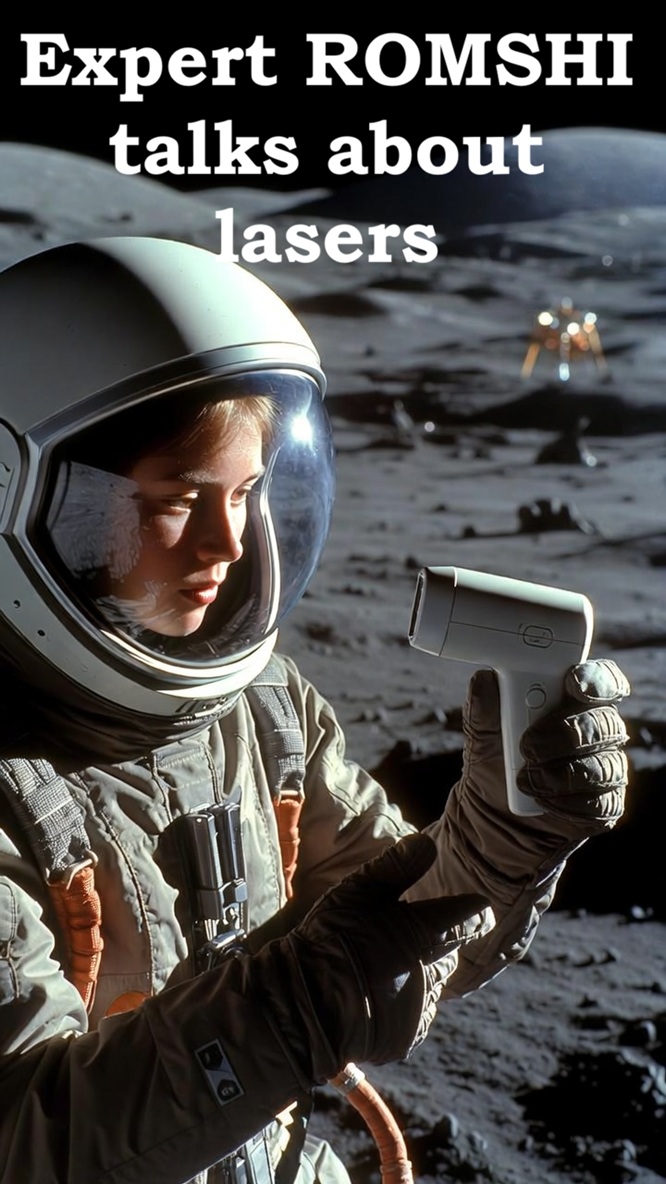
Yes, it sounds like a challenge for a sci-fi hero, but with 2025–2026 technology, taking a portable IPL or diode laser for hair removal on a lunar mission is entirely feasible — provided you're ready to handle the extreme conditions: vacuum, low gravity (1/6g), radiation, temperatures ranging from -173°C at night to +127°C during the day, and the complete absence of power outlets.The main challenge is powering the device, since there's no standard "socket" on the Moon (no infrastructure like on regular Earth bases). But there are practical solutions: from battery-powered portable gadgets to expedition "hacks." Let's break it down step by step, based on current devices and mission experience.1. Choosing Equipment: Portable and Compact Models of 2026In 2026, at-home laser and IPL devices have become even lighter, more powerful, and more autonomous. They don't require a clinic — just charge and use. Perfect for extreme conditions: many weigh 200–600 g, run on built-in batteries, and are suitable for face, body, and bikini areas.Top options you can pack in a mission payload:
- Ulike Air 10 or Braun Silk Expert Pro 5 — lightweight, with ice cooling, battery life for 30–60 minutes, thousands of flashes. Charge via USB-C/power bank.
- Tria 4X — real diode laser (not IPL), powerful, compact, battery lasts a full course.
- CurrentBody Skin Laser — portable "mini-clinic" designed for travel.
Why they work on the Moon: The laser operates on the principle of selective photothermolysis — light is absorbed by melanin in the hair, heating the follicle. Vacuum and low gravity do not affect the process (light travels the same way, pressure is irrelevant). Procedures are performed inside a pressurized habitat (where astronauts live) with normal Earth-like pressure. On the surface in a spacesuit — impossible (you can't remove the suit).2. Power Supply: A "Socket" on the Moon?No cables from Earth, but NASA/Artemis and private missions are already solving power for bases, rovers, and equipment:
- Solar Panels — primary source. Vertical arrays (LVSAT by Lockheed Martin) or foldable panels provide abundant energy during the lunar day (14 Earth days). Power banks charge in hours.
- Power Beaming — laser energy transmission from orbit (Star Catcher + Intuitive Machines testing in 2025–2026). Or wireless rover charging.
- Batteries & RTGs/Small Reactors — for the lunar night (but initially only for critical systems). For gadgets — high-capacity lithium-ion banks from the mission (Goal Zero-style, but space-rated).
- In Starship HLS — huge solar panels on the nose, plus batteries. Charging a device is as easy as on Earth via USB-C.
How to get a "socket":
- Charge in advance on Earth + en route (on Orion/Gateway).
- On the Moon: connect to the lunar habitat/Starship (220V/USB from solar systems).
- For autonomy: 50,000+ mAh power bank (weight ~1 kg) — enough for several courses.
- Specifics and Risks on the Moon
- Vacuum — dangerous outside (skin can't survive), but inside — fine. The laser hates dust (lunar regolith is everywhere), so cleanliness is critical — treat it like a sterile clinic.
- Low Gravity — hair/skin don't "float," but sweat/moisture evaporates more slowly → skin drier, may need extra moisturizing after sessions.
- Radiation + Extreme Temperatures — store the device in thermal insulation (sleeping bag/container), otherwise the battery "freezes." Astronaut skin already suffers from dryness/radiation — hair removal can increase irritation, so a test patch is mandatory.
- Hygiene in Space — NASA already thinks about personal care (wet wipes, no-rinse shampoo, edible toothpaste). Hair removal is a logical next step: for comfort and psychology during long missions (6–12+ months).
Realistic Scenario for 2026–2030:
- An astronaut packs a compact IPL device in the payload (weight 0.5 kg — negligible).
- In the pressurized habitat (Starship or future base), charges it from solar panels.
- Performs sessions in the "bathroom" area — 10–20 minutes per zone, course of 6–8 sessions (interval 4–6 weeks).
- Result: smooth skin without shaving (in a spacesuit, shaving is a nightmare due to microgravity).
Conclusion: Yes, it's possible already in the early Artemis missions! The biggest challenge is not the technology, but logistics (bringing it along, protecting it from vibrations/radiation). But if billionaires like Maezawa (dearMoon) or tourists fly — hair removal on the Moon will become the first "space beauty trend."The first "smooth" astronaut on the Moon — that will be legendary! Romshi — Manufacturer of 808 nm Diode Stacks
Supplier of Laser Hair Removal Machines & Spare Parts www.romshi.com
+79180110234 Shipping from China #hairremoval #Moon #diodelaser #romshi
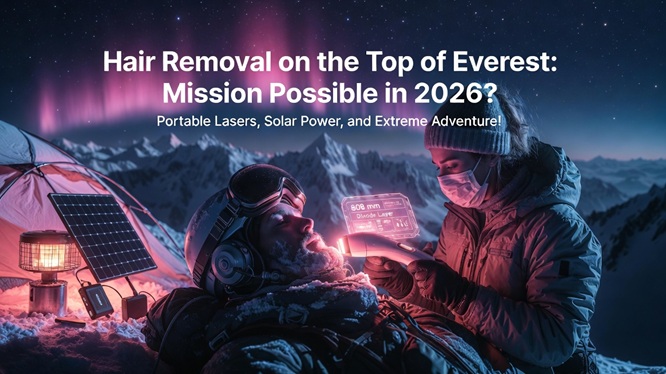
Hair Removal on the Top of Everest: Mission Possible in 2026? Yes, it sounds like a superhero challenge, but with 2026 technology, performing laser or IPL hair removal on Mount Everest (8848 m) is entirely feasible — if you're not afraid of cold (-30…-60°C), wind (up to 200 km/h), low pressure (about 1/3 of sea level), and the complete absence of power outlets.
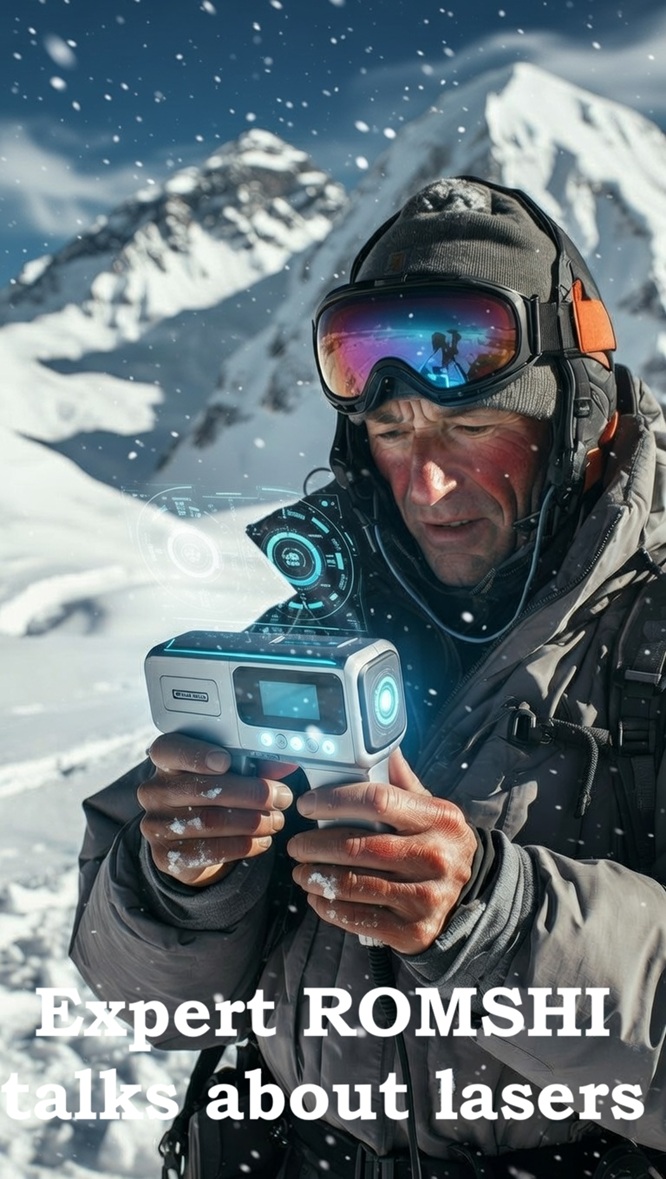
The main problem is powering the equipment, since you can't just run a standard "socket" up there (no infrastructure like on regular base camps). But there are options: from portable battery-powered gadgets to expedition "hacks." Let's break it down step by step, based on current devices and expedition experience.
- Choosing Equipment for Hair Removal: Portable and Compact Models of 2026
In 2026, at-home laser and IPL devices (Intense Pulsed Light) have become even lighter, more powerful, and more autonomous. They don't require a clinic — just charge and use. Perfect for extreme conditions: many weigh 200–500 g, run on batteries, and are suitable for face, body, and bikini areas.Top options you can carry in a backpack (based on tests and reviews):
- Braun Silk Expert Pro 5 IPL: Compact (about 400 g), with a built-in battery for 300,000 flashes. 10 intensity levels, skin sensor. Works from mains or battery — charges in 1–2 hours. Ideal for travel, including cold (but keep it warm so the battery doesn't "freeze").
- Ulike Air 10 IPL: Lightweight (300 g), with ice cooling for painless use, dual flashes for speed. Autonomous for 999,999 flashes, battery lasts 30–60 minutes. Testers praise it for effectiveness (96% hair growth reduction in 3 weeks) and compactness — fits in a jacket pocket.
- Tria 4X Hair Removal Laser: Real diode laser (not IPL), achieves up to 100% removal after a course. Weighs 500 g, built-in battery for 30–45 minutes. Clinically proven, powerful (up to 233% more energy than competitors). Suitable for dark skin.
- RoseSkinCo Lumi IPL or Silk’n Infinity Fast: Budget-friendly (under $200), portable for travel, with batteries. Hold charge for several sessions, lightweight (200–300 g).
Tip for high-altitude use: Perform the procedure inside a tent at base camps (e.g., 5300–6400 m), where it's warmer. Cold reduces effectiveness (skin must be dry and warm), so use a heater or chemical warmers. Low pressure doesn't affect the laser, but watch your skin — altitude dries it out, so moisturize.
- How to Provide Power: A "Socket" on Everest?
A direct cable from Nepal to the summit is fantasy: the mountain is too harsh (avalanches, wind, 29 km altitude). But expeditions already solve this for gadgets, cameras, and medical equipment. Here are real options for 2026 (based on experience from National Geographic, Alpine Ascents, and drone deliveries):
- Option 1: Solar Panels + Power Banks (most practical and eco-friendly)
At base camps (e.g., Base Camp at 5364 m), solar panels are standard. Take a foldable 10–20 W panel (weight 1–2 kg, like Goal Zero Nomad 20) and a power bank (Goal Zero Venture 35 or Anker PowerCore 20,000–50,000 mAh). Charges in 4–8 hours in sunlight (even in clouds).
How it works: Attach the panel to your backpack or tent, charge the bank, then power the device from it.
Pros: lightweight (only 2–3 kg total), unlimited resource, works at altitude (sun is brighter due to thin atmosphere).
Cons: no power in storms or at night. Solution: several banks pre-charged in Kathmandu.
Cost: 100–300 USD. This is the main method for electronics in expeditions. - Option 2: Portable Generators (for reliability)
Gasoline or diesel generator (e.g., Honda EU2200i, 2–3 kW, weight 20–30 kg). Sherpas carry it to base camp, then you connect the "socket" (extension cord).
How to deliver: drone delivery (in 2025–2026 Airlift Technology already flies to Everest, carrying 20–30 kg at a time, including fuel). Or Sherpas (but expensive, 1000–5000 USD per expedition).
Pros: stable 220V power, like home. Charges everything in minutes.
Cons: heavy, fuel freezes in cold (use antifreeze), low pressure reduces efficiency (generator runs at 50–70%). Noise and smoke — not ideal for the summit.
Alternative: hydrogen fuel cells (e.g., Horizon Fuel Cell, lightweight but expensive ~5000 USD), provide clean power without noise. - Option 3: Batteries and Power Banks (minimalist)
Simply charge the device in advance in Lukla (2800 m, electricity available) or lower camps (up to Pheriche ~4000 m — mains power, higher — solar for 5–10 USD/hour). Use lithium-ion batteries with cold protection (keep in sleeping bag).
Pros: no extra weight.
Cons: cold discharges batteries 2–3 times faster — wrap in thermal insulation.
Addition: hybrid devices with USB-C (charge from power bank). - Option 4: Drone Delivery and "Smart" Bases (futuristic for 2026)
Companies like Airlift already deliver equipment by drone to Camp 1–2 (6000–6500 m). Order a charge or fresh batteries from base — flight takes 10–20 minutes. In the future: stationary solar stations along the route (as proposed for tourism).
- Practical Tips and Risks
- Preparation: Test the device in cold conditions (freezer or mountain training). Wear gloves — touchscreen. Oxygen: at the summit without O₂ you won't do hair removal (hypoxia), so take cylinders (but not compressors — heavy and inefficient at altitude).
- Expedition cost: 30,000–100,000 USD (permits, Sherpas, logistics). Add 500–2000 USD for gadgets.
- Ecology: Don't leave trash — Everest is already polluted.
Joke for the road: If hair removal is for "perfect summit look" — better take wax or a razor (no electricity needed). But with a laser, you'll be the first "smooth" conqueror of Everest!
What could modern cosmetology do for a shark?
(Theoretically, using the most up-to-date procedures of 2025–2026)The shark represents over 400 million years of evolution, with perfect hydrodynamics, tough skin covered in placoid scales (dermal denticles), and the eternal issues of "roughness," sun-induced pigment spots, and "age-related" battle scars.
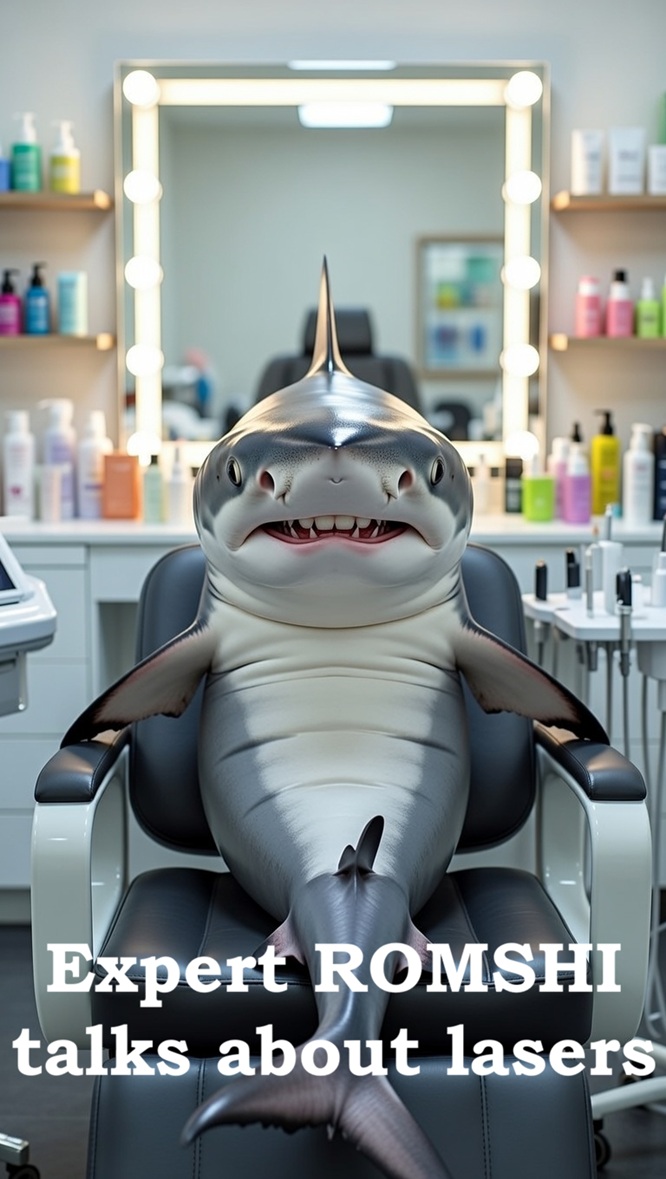
Imagine an underwater cosmetic center equipped with gigantic lasers, RF stations, and an unlimited budget. Here's what could be done to make the shark look like a "young barracuda after a spa day."
- Full laser removal of placoid scales (dermal denticles)
1064 nm Nd:YAG + 808 nm diode in combo mode.
Energy 50–80 J/cm², long pulse 100–200 ms.
Result: the shark becomes smooth like a dolphin — hydrodynamics slightly reduced, but the skin is perfectly silky. - Photo-rejuvenation and skin tone evening
IPL 560–1200 nm + picosecond 1064 nm.
Eliminates gray-blue sun spots, scars from rival sharks, and uneven coloring.
The shark gains a uniform steel gray-blue tone — underwater luxury aesthetic. - RF-lifting and skin tightening
Monopolar RF + HIFU at 4–7 MHz (depth up to 13 mm).
Stimulates collagen synthesis in the dermis.
Result: skin becomes more elastic, less saggy — the shark looks "taut" and youthful. - Laser fin and tail peeling
532 nm green + 755 nm alexandrite.
Removes yellowness, spots, algae, and fungus.
Fins become bright, glossy, like those of an aquarium superstar fish. - Intensive hydration and moisturizing
"Subdermal mesotherapy" + injections of hyaluronic acid and peptides (theoretically).
Plus laser-assisted carboxytherapy (CO2 injections).
Result: the shark looks "hydrated" — skin appears plump, free of dryness and flaking. - Removal of "warts" and old scars
808 nm diode + CO2 ablation.
All scars from enemy sharks, galls, and growths — gone, smooth, trace-free. - Teeth whitening
Laser whitening gel + 445–532 nm.
After 3 sessions, teeth become snow-white — the perfect Hollywood smile for a predator. - Laser hair removal of "fin hairs"
1064 nm — removal of any random "hairy" guests on the fins.
Result: fins perfectly smooth. - Facial contouring
RF-microneedles + laser lifting.
Tightens skin around the mouth, making contours sharper and more "fashionable." - Full VIP package "Shark 2.0"
Complete scale removal + photo-rejuvenation
• RF body lifting
• Teeth whitening and fin treatment
• Intensive hydration
• Removal of all scars and parasites
The result: A 100-year-old shark looks like a 10-year-old — smooth, radiant, elastic, with dazzling white teeth and flawless skin.
Now she's not just a predator — she's an underwater supermodel, leaving every fish in a faint.
What could modern cosmetology do for a baobab tree?
(Theoretically, of course — using the coolest procedures of 2025–2026)The baobab is the iconic "upside-down tree," with a lifespan of 1000–5000 years, a massive couch-like trunk (up to 30 m in circumference), thick wrinkled bark, and the eternal struggle with dehydration + that "elderly" appearance.
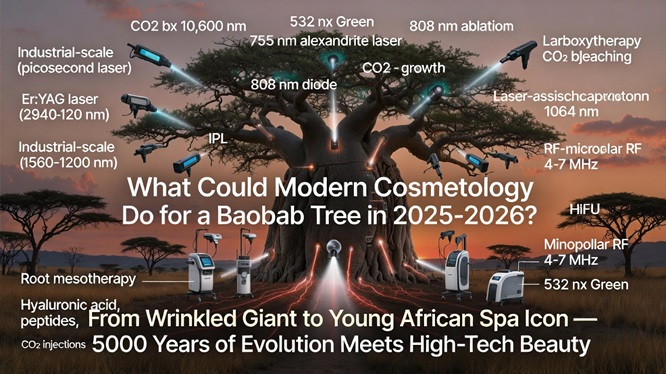
Imagine we have an industrial-scale laser complex the size of a house, a giant RF station, and an unlimited budget. Here's what could be done to make the baobab look like a "young cactus after a spa day."
- Deep fractional bark resurfacing
Powerful CO2 laser (10,600 nm) + Er:YAG (2940 nm) on a gigantic scale.
Removes all cracks, dry layers, moss, lichens, fungus, and centuries-old "wrinkles."
Result: bark becomes smooth and even, like that of a 50-year-old tree — no more "old-man" grooves. - Photo-rejuvenation and tone lightening
IPL (560–1200 nm) + industrial-scale picosecond 1064 nm.
Lightens the grayed-out, sun-darkened brown shade and evens out unevenness.
The baobab gains a warm, uniform chocolate-beige tone — pure African luxury aesthetic. - RF-lifting and trunk firming
Monopolar RF + HIFU at 4–7 MHz with penetration up to 13–20 mm (adapted).
Stimulates "collagen" synthesis in the wood (lignin, cellulose, hemicellulose).
The trunk becomes slightly more elastic, sagging less under the weight of the crown and stored water. - Intensive hydration and moisturizing
"Root mesotherapy" + injections of hyaluronic acid, peptides, and vitamins directly into the surrounding soil.
Plus laser-assisted carboxytherapy (CO2 injections).
Result: the baobab looks "hydrated" — trunk appears plump, fresh, and free of dryness. - Laser leaf peeling
532 nm green + 755 nm alexandrite.
Removes yellowness, spots, fungus, and insects. Leaves become bright green and glossy year-round. - Removal of "warts" and growths
808 nm diode + CO2 ablation.
All galls, growths, bumps from insects and old wounds — gone, smooth, scar-free. - Internal wood bleaching
If a branch is cut — picosecond laser lightens the cut surface.
Get "blond" wood for elite designer furniture. - Laser hair removal of moss and lichens
1064 nm Nd:YAG — complete removal of all "hairy" guests.
The baobab stays perfectly clean and "shaved." - Crown contouring
RF-microneedles + laser branch lifting.
Tightens drooping branches, making the crown more compact and "trendy." - Full VIP package "Baobab 2.0"
Deep bark resurfacing + photo-rejuvenation
• RF trunk lifting
• Intensive root hydration
• Leaf brightening and treatment
• Removal of all parasites and growths
The result: A 2000-year-old baobab looks like a 200-year-old — young, smooth, plump, radiant, bursting with life juices.
Now it's not just a tree — it's an African Instagram billionaire tree.
Страница 3 из 7
- Вы здесь:
-
Главная

- Expert ROMSHI talks about lasers