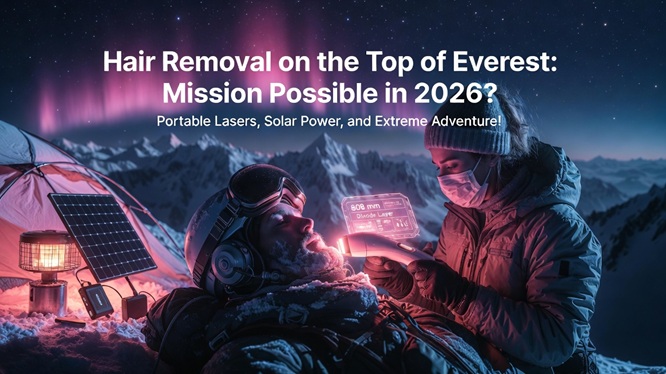
Hair Removal on the Top of Everest: Mission Possible in 2026? Yes, it sounds like a superhero challenge, but with 2026 technology, performing laser or IPL hair removal on Mount Everest (8848 m) is entirely feasible — if you're not afraid of cold (-30…-60°C), wind (up to 200 km/h), low pressure (about 1/3 of sea level), and the complete absence of power outlets.
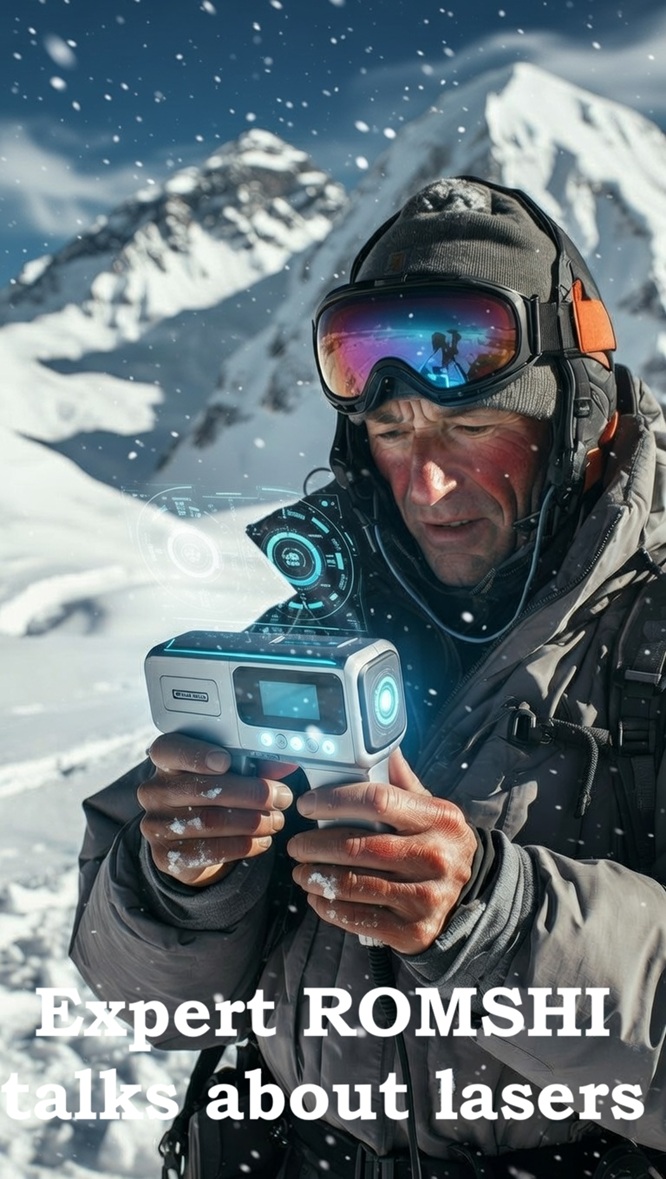
The main problem is powering the equipment, since you can't just run a standard "socket" up there (no infrastructure like on regular base camps). But there are options: from portable battery-powered gadgets to expedition "hacks." Let's break it down step by step, based on current devices and expedition experience.
- Choosing Equipment for Hair Removal: Portable and Compact Models of 2026
In 2026, at-home laser and IPL devices (Intense Pulsed Light) have become even lighter, more powerful, and more autonomous. They don't require a clinic — just charge and use. Perfect for extreme conditions: many weigh 200–500 g, run on batteries, and are suitable for face, body, and bikini areas.Top options you can carry in a backpack (based on tests and reviews):
- Braun Silk Expert Pro 5 IPL: Compact (about 400 g), with a built-in battery for 300,000 flashes. 10 intensity levels, skin sensor. Works from mains or battery — charges in 1–2 hours. Ideal for travel, including cold (but keep it warm so the battery doesn't "freeze").
- Ulike Air 10 IPL: Lightweight (300 g), with ice cooling for painless use, dual flashes for speed. Autonomous for 999,999 flashes, battery lasts 30–60 minutes. Testers praise it for effectiveness (96% hair growth reduction in 3 weeks) and compactness — fits in a jacket pocket.
- Tria 4X Hair Removal Laser: Real diode laser (not IPL), achieves up to 100% removal after a course. Weighs 500 g, built-in battery for 30–45 minutes. Clinically proven, powerful (up to 233% more energy than competitors). Suitable for dark skin.
- RoseSkinCo Lumi IPL or Silk’n Infinity Fast: Budget-friendly (under $200), portable for travel, with batteries. Hold charge for several sessions, lightweight (200–300 g).
Tip for high-altitude use: Perform the procedure inside a tent at base camps (e.g., 5300–6400 m), where it's warmer. Cold reduces effectiveness (skin must be dry and warm), so use a heater or chemical warmers. Low pressure doesn't affect the laser, but watch your skin — altitude dries it out, so moisturize.
- How to Provide Power: A "Socket" on Everest?
A direct cable from Nepal to the summit is fantasy: the mountain is too harsh (avalanches, wind, 29 km altitude). But expeditions already solve this for gadgets, cameras, and medical equipment. Here are real options for 2026 (based on experience from National Geographic, Alpine Ascents, and drone deliveries):
- Option 1: Solar Panels + Power Banks (most practical and eco-friendly)
At base camps (e.g., Base Camp at 5364 m), solar panels are standard. Take a foldable 10–20 W panel (weight 1–2 kg, like Goal Zero Nomad 20) and a power bank (Goal Zero Venture 35 or Anker PowerCore 20,000–50,000 mAh). Charges in 4–8 hours in sunlight (even in clouds).
How it works: Attach the panel to your backpack or tent, charge the bank, then power the device from it.
Pros: lightweight (only 2–3 kg total), unlimited resource, works at altitude (sun is brighter due to thin atmosphere).
Cons: no power in storms or at night. Solution: several banks pre-charged in Kathmandu.
Cost: 100–300 USD. This is the main method for electronics in expeditions. - Option 2: Portable Generators (for reliability)
Gasoline or diesel generator (e.g., Honda EU2200i, 2–3 kW, weight 20–30 kg). Sherpas carry it to base camp, then you connect the "socket" (extension cord).
How to deliver: drone delivery (in 2025–2026 Airlift Technology already flies to Everest, carrying 20–30 kg at a time, including fuel). Or Sherpas (but expensive, 1000–5000 USD per expedition).
Pros: stable 220V power, like home. Charges everything in minutes.
Cons: heavy, fuel freezes in cold (use antifreeze), low pressure reduces efficiency (generator runs at 50–70%). Noise and smoke — not ideal for the summit.
Alternative: hydrogen fuel cells (e.g., Horizon Fuel Cell, lightweight but expensive ~5000 USD), provide clean power without noise. - Option 3: Batteries and Power Banks (minimalist)
Simply charge the device in advance in Lukla (2800 m, electricity available) or lower camps (up to Pheriche ~4000 m — mains power, higher — solar for 5–10 USD/hour). Use lithium-ion batteries with cold protection (keep in sleeping bag).
Pros: no extra weight.
Cons: cold discharges batteries 2–3 times faster — wrap in thermal insulation.
Addition: hybrid devices with USB-C (charge from power bank). - Option 4: Drone Delivery and "Smart" Bases (futuristic for 2026)
Companies like Airlift already deliver equipment by drone to Camp 1–2 (6000–6500 m). Order a charge or fresh batteries from base — flight takes 10–20 minutes. In the future: stationary solar stations along the route (as proposed for tourism).
- Practical Tips and Risks
- Preparation: Test the device in cold conditions (freezer or mountain training). Wear gloves — touchscreen. Oxygen: at the summit without O₂ you won't do hair removal (hypoxia), so take cylinders (but not compressors — heavy and inefficient at altitude).
- Expedition cost: 30,000–100,000 USD (permits, Sherpas, logistics). Add 500–2000 USD for gadgets.
- Ecology: Don't leave trash — Everest is already polluted.
Joke for the road: If hair removal is for "perfect summit look" — better take wax or a razor (no electricity needed). But with a laser, you'll be the first "smooth" conqueror of Everest!