
Hair Removal on the Moon in 2026 (in the Context of the Artemis Program and Early Missions): Is It Already More Than Just Science Fiction?
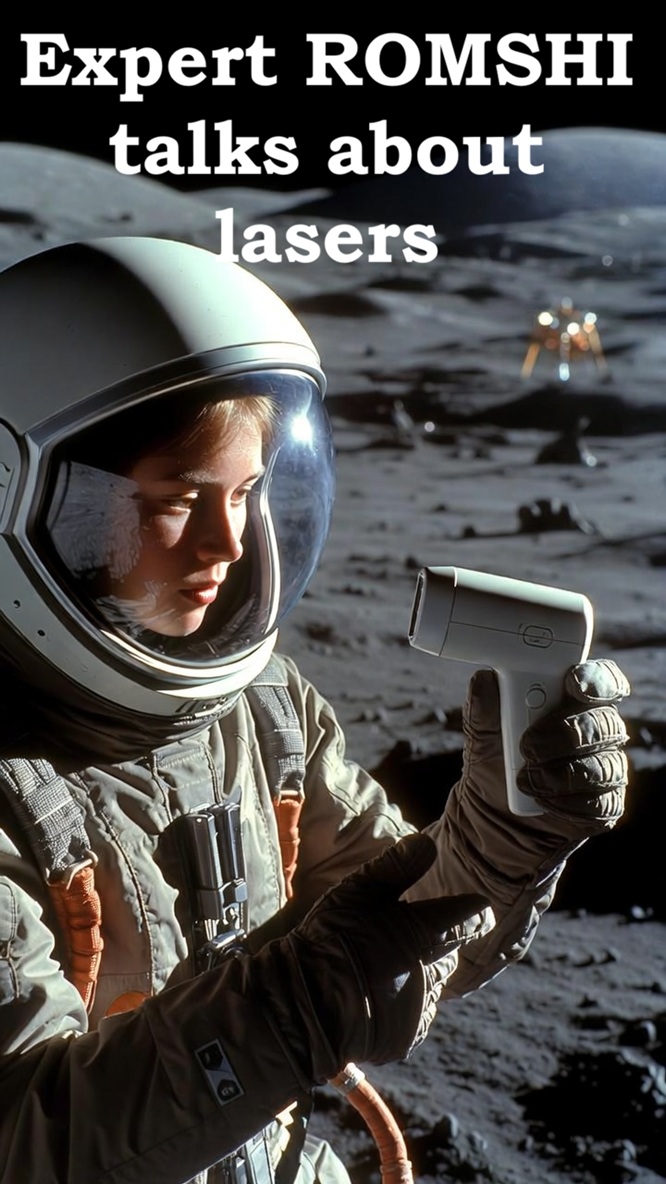
Yes, it sounds like a challenge for a sci-fi hero, but with 2025–2026 technology, taking a portable IPL or diode laser for hair removal on a lunar mission is entirely feasible — provided you're ready to handle the extreme conditions: vacuum, low gravity (1/6g), radiation, temperatures ranging from -173°C at night to +127°C during the day, and the complete absence of power outlets.The main challenge is powering the device, since there's no standard "socket" on the Moon (no infrastructure like on regular Earth bases). But there are practical solutions: from battery-powered portable gadgets to expedition "hacks." Let's break it down step by step, based on current devices and mission experience.1. Choosing Equipment: Portable and Compact Models of 2026In 2026, at-home laser and IPL devices have become even lighter, more powerful, and more autonomous. They don't require a clinic — just charge and use. Perfect for extreme conditions: many weigh 200–600 g, run on built-in batteries, and are suitable for face, body, and bikini areas.Top options you can pack in a mission payload:
- Ulike Air 10 or Braun Silk Expert Pro 5 — lightweight, with ice cooling, battery life for 30–60 minutes, thousands of flashes. Charge via USB-C/power bank.
- Tria 4X — real diode laser (not IPL), powerful, compact, battery lasts a full course.
- CurrentBody Skin Laser — portable "mini-clinic" designed for travel.
Why they work on the Moon: The laser operates on the principle of selective photothermolysis — light is absorbed by melanin in the hair, heating the follicle. Vacuum and low gravity do not affect the process (light travels the same way, pressure is irrelevant). Procedures are performed inside a pressurized habitat (where astronauts live) with normal Earth-like pressure. On the surface in a spacesuit — impossible (you can't remove the suit).2. Power Supply: A "Socket" on the Moon?No cables from Earth, but NASA/Artemis and private missions are already solving power for bases, rovers, and equipment:
- Solar Panels — primary source. Vertical arrays (LVSAT by Lockheed Martin) or foldable panels provide abundant energy during the lunar day (14 Earth days). Power banks charge in hours.
- Power Beaming — laser energy transmission from orbit (Star Catcher + Intuitive Machines testing in 2025–2026). Or wireless rover charging.
- Batteries & RTGs/Small Reactors — for the lunar night (but initially only for critical systems). For gadgets — high-capacity lithium-ion banks from the mission (Goal Zero-style, but space-rated).
- In Starship HLS — huge solar panels on the nose, plus batteries. Charging a device is as easy as on Earth via USB-C.
How to get a "socket":
- Charge in advance on Earth + en route (on Orion/Gateway).
- On the Moon: connect to the lunar habitat/Starship (220V/USB from solar systems).
- For autonomy: 50,000+ mAh power bank (weight ~1 kg) — enough for several courses.
- Specifics and Risks on the Moon
- Vacuum — dangerous outside (skin can't survive), but inside — fine. The laser hates dust (lunar regolith is everywhere), so cleanliness is critical — treat it like a sterile clinic.
- Low Gravity — hair/skin don't "float," but sweat/moisture evaporates more slowly → skin drier, may need extra moisturizing after sessions.
- Radiation + Extreme Temperatures — store the device in thermal insulation (sleeping bag/container), otherwise the battery "freezes." Astronaut skin already suffers from dryness/radiation — hair removal can increase irritation, so a test patch is mandatory.
- Hygiene in Space — NASA already thinks about personal care (wet wipes, no-rinse shampoo, edible toothpaste). Hair removal is a logical next step: for comfort and psychology during long missions (6–12+ months).
Realistic Scenario for 2026–2030:
- An astronaut packs a compact IPL device in the payload (weight 0.5 kg — negligible).
- In the pressurized habitat (Starship or future base), charges it from solar panels.
- Performs sessions in the "bathroom" area — 10–20 minutes per zone, course of 6–8 sessions (interval 4–6 weeks).
- Result: smooth skin without shaving (in a spacesuit, shaving is a nightmare due to microgravity).
Conclusion: Yes, it's possible already in the early Artemis missions! The biggest challenge is not the technology, but logistics (bringing it along, protecting it from vibrations/radiation). But if billionaires like Maezawa (dearMoon) or tourists fly — hair removal on the Moon will become the first "space beauty trend."The first "smooth" astronaut on the Moon — that will be legendary! Romshi — Manufacturer of 808 nm Diode Stacks
Supplier of Laser Hair Removal Machines & Spare Parts www.romshi.com
+79180110234 Shipping from China #hairremoval #Moon #diodelaser #romshi