In the world of professional laser hair removal, one wavelength stands out above the rest: 808 nm. It's not just a number — it's a proven optimal balance that delivers safe, effective, and long-lasting results.
Many manufacturers and clinics call 808 nm the "gold standard" for diode lasers in hair removal, thanks to its ideal combination of penetration depth, melanin absorption, and minimal risk to the skin. Let's dive deeper into why this wavelength has earned such recognition.Perfect Melanin AbsorptionThe 808 nm wavelength is optimally absorbed by melanin in the hair follicle while minimally interacting with melanin in the surrounding skin. This provides:
Deep penetration — the laser beam reaches the follicle directly, destroying it at the bulb and stem level, leading to long-term hair growth reduction.
Reduced risk of burns and discomfort — especially on darker skin tones (Fitzpatrick scale IV–V, and in some cases VI). Unlike shorter wavelengths, 808 nm scatters less in the epidermis.
Excellent results across a wide range of hair types — from thick and dark to relatively fine (though laser hair removal in general is less effective on very light or gray hair).
This principle is based on selective photothermolysis: laser energy is converted into heat precisely in the follicle's melanin, heating and destroying it without damaging adjacent tissues.The Ideal Balance of Power and SafetyCompared to other popular wavelengths:
755 nm (Alexandrite laser): Works excellently on fair skin (Fitzpatrick types I–III), fast and effective for fine hair, but more superficial and riskier on darker tones — can cause burns or hyperpigmentation.
1064 nm (Nd:YAG laser): The safest for very dark skin (types V–VI), penetrates deeply while minimizing epidermal absorption, but less effective on fine or light hair due to weaker melanin absorption.
808 nm is the "sweet spot": deep enough for permanent hair reduction, yet gentle enough for comfortable treatments on most skin types (I–V). Modern devices often combine multiple wavelengths (755 + 808 + 1064 nm) for maximum versatility, but pure 808 nm remains the primary and most universal choice for diode systems.Clinically Proven Effectiveness Over Decades
Backed by thousands of studies and millions of successful procedures worldwide.
Predictable results from session to session: typically 6–10 treatments are needed for significant (up to 80–90%) hair growth reduction.
Minimal side effects when using modern cooling systems (sapphire contact cooling tip or cryogen).
Bonus benefit: 808 nm can stimulate collagen production in the dermis, improving skin texture, reducing pores, and minimizing fine wrinkles.
Unmatched Reliability and PerformanceHigh-quality 808 nm diode stacks deliver:
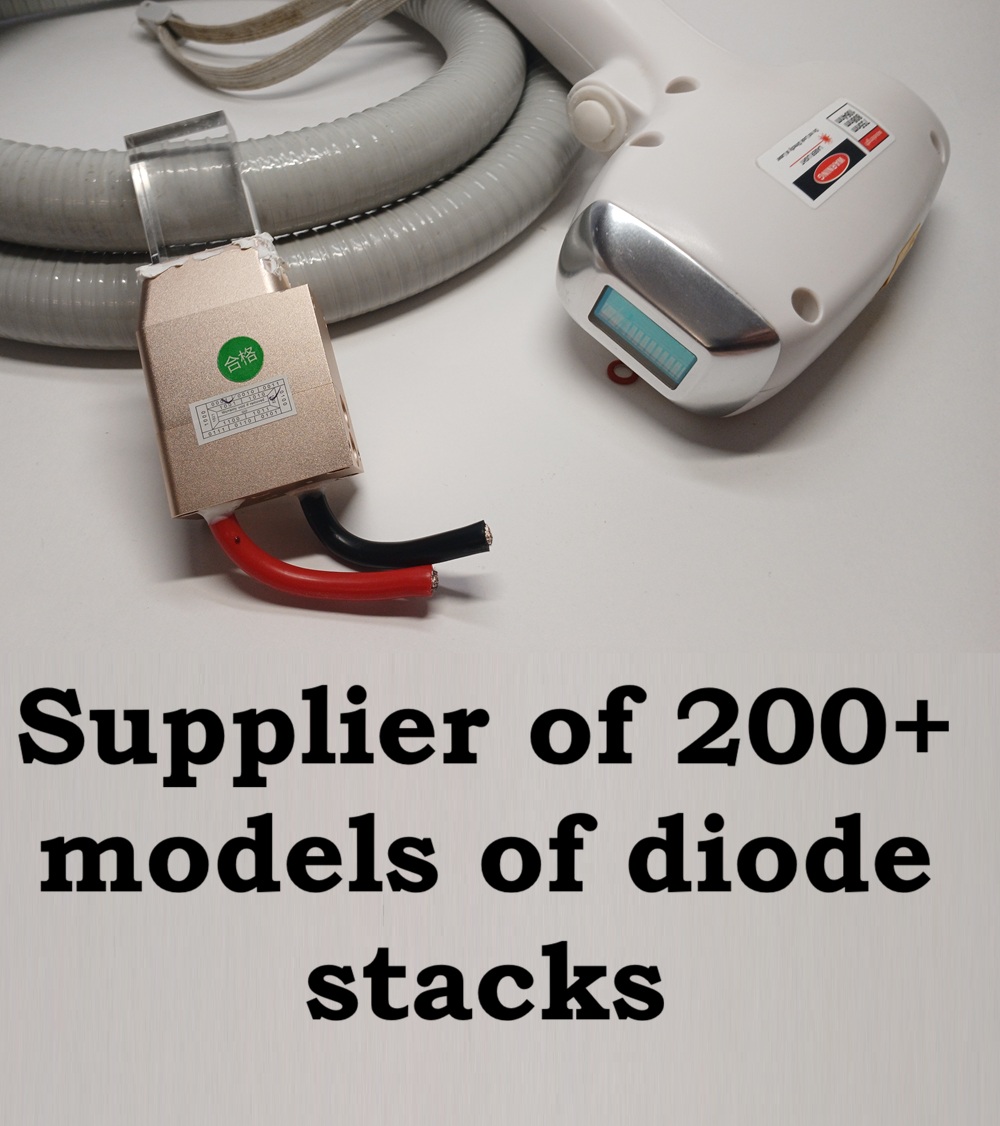
Up to 30–50 million pulses with proper maintenance.
Stable power output even under intensive salon use.
Lower long-term costs for equipment owners due to exceptional durability.
10 Unique Facts About 808 nm
Optimal melanin absorption: 808 nm is ideally absorbed by melanin in the hair follicle but minimally by skin, hemoglobin, and water, ensuring deep penetration without overheating the epidermis.
The sweet spot among wavelengths: Unlike 755 nm (risky for dark skin) and 1064 nm (less effective on fine hair), 808 nm combines depth, efficacy, and safety for skin types I–V.
Diode stack longevity: High-quality 808 nm bars withstand up to 30–50 million pulses, making the equipment cost-effective for heavy use.
Skin rejuvenation effect: Beyond hair removal, 808 nm stimulates new collagen synthesis, improving skin elasticity and reducing pores.
Clinically proven efficacy: 70–90% hair reduction after 6–10 sessions, with results lasting 18+ months.
Safety for dark skin: Minimizes risks of burns and pigmentation on skin types IV–VI, confirmed by studies.
Selective photothermolysis principle: Heat is concentrated precisely in the follicle, destroying it without harming surrounding tissues.
Versatility in combinations: Often the main wavelength in triple-wave lasers (with 755 and 1064 nm), but pure 808 nm is the most popular in diode systems.
Minimal discomfort: With modern cooling, treatments are virtually painless, with only rare mild redness.
Broader applications beyond hair removal: Used in photobiomodulation for tissue healing, acne treatment, and inflammation reduction.