

Traveling to the 15th Century (c. 1400–1500, Europe) with Modern Cosmetology Knowledge — A Dream and Nightmare for an Amateur DermatologistYou arrive without lasers, peptides, bottled retinol, synthetic hyaluronic acid, SPF filters, or sterile injectables.
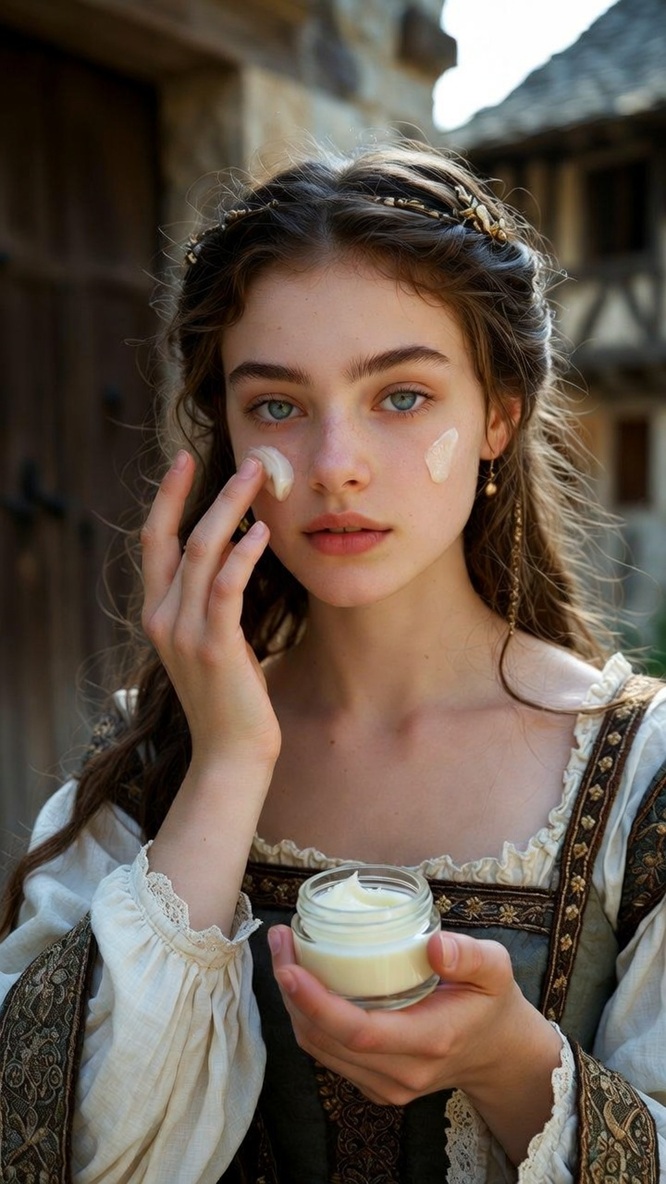
But you do have access to a huge arsenal of natural ingredients that were already in use at the time (according to texts by Trotula, Caterina Sforza, Hildegard von Bingen, and other surviving sources).
Surprisingly, many of them are the direct historical ancestors of modern active ingredients!Here’s how to get as close as realistically possible to 2026-level skincare using only materials and techniques actually available in the 15th century.Basic Routine — Cleansing + Hydration + Protection (already practiced then)
- Cleansing (equivalent to gentle gel cleanser / micellar water)
- Wood ash (especially beech or oak) + water → lye solution — the basis of medieval soap.
- Gentler option: oat flour/bran + milk / rose water — a very mild exfoliating cleanser (remarkably similar to modern oat-based cleansers).
- For dry skin: egg yolk + honey — a nourishing cleansing balm, rinsed off with warm water.
- Exfoliation / Peeling (AHA/BHA analogues)
- Acid peel: strongly diluted wine or apple vinegar (5–10% in water or rose water) — mild AHA-like effect, brightens and exfoliates.
- Lemon juice + honey — natural vitamin C + antioxidants (very close to modern vitamin C serums).
- Mashed strawberries/wild strawberries — natural fruit acids.
- Hydration & Barrier (hyaluronic acid + ceramides + emollients equivalents)
- Rose water (distilled rose petals) — the universal medieval toner/hydrator.
- Honey — natural humectant (draws moisture like glycerin).
- Fats/oils: goose or lard fat, olive oil, sweet almond oil, beeswax → base for all ointments (very occlusive, rich creams — similar to modern petrolatum + oil balms).
- Egg white — light film-forming mask for tightening and light hydration.
- Brightening / Even Tone (vitamin C, niacinamide, tranexamic acid analogues)
- Wheat flour paste (soaked 15 days → fermented crystals mixed with rose water) — the classic aristocratic white powder base.
- Crushed white lily root — known brightening agent.
- Fresh parsley or cucumber juice — reduces pigmentation.
- Anti-Aging / Collagen Stimulation (retinol / peptide analogues)
- Bakuchiol — seeds/leaves of Psoralea corylifolia (if you’re lucky enough to get it through Eastern spice traders) — the closest natural retinol-like active (without the irritation!).
- Rose oil + saffron + musk — for glow and firmness.
- Regular masks: egg yolk + honey + olive oil — deep nourishment and repair.
- Wax: Greek pitch (resin) + beeswax + galbanum resin — boiled for a long time → effective medieval depilatory wax (surprisingly good).
- Dangerous (but historically popular) option: quicklime + orpiment (arsenic sulfide) — never use this; it causes severe chemical burns and poisoning.
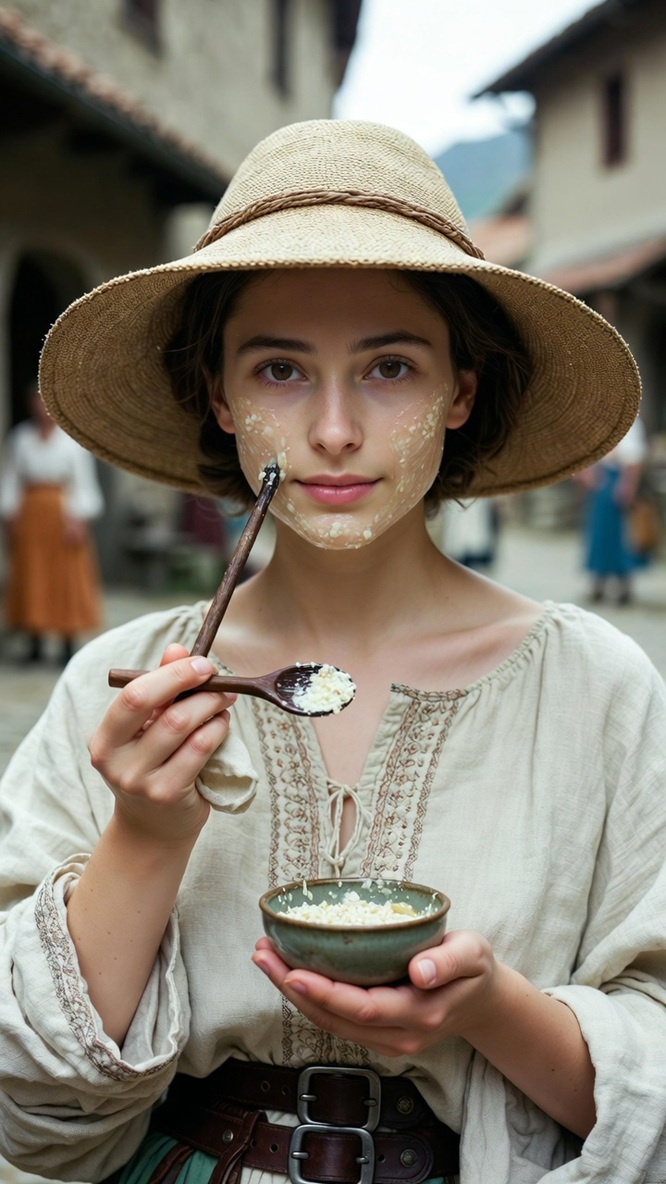
- White base: lead white (very toxic — widely used) → safe alternative: rice or wheat flour.
- Blush & lips: alkanet root (red), elderberry/raspberry juice, carmine from cochineal (if you can source it).
- Brows/lashes: soot + fat — very close to modern kajal.
- Morning:
Wash with oat bran + rose water. - Serum:
Lemon juice + honey + rose water (vitamin C + hydration). - Cream:
Beeswax + olive oil + rose petals/oil (rich occlusive barrier). - Protection:
Wide-brimmed hat + strict sun avoidance (pale skin = beauty standard). - Evening:
Egg yolk + honey mask → rinse → apply rich fat-based ointment. - 1–2× per week:
Diluted vinegar peel (carefully!) + parsley brightening mask.
- Potent actives (retinol strength, peptides, niacinamide, AHAs/BHAs at therapeutic concentrations)
- True broad-spectrum UV protection
- Non-comedogenic textures
- Sterility & precise delivery systems